TL;DR
The best personalized nutrition apps go beyond calorie tracking. They adapt fueling guidance to training demands, recovery needs, food preferences, and race goals. We recommend using a simple test: change a scheduled workout and see whether the nutrition plan updates. If nothing changes, the app is likely a tracker rather than a training-synced fueling tool.
Table of Contents
- What Makes a Nutrition App Genuinely Personalized?
- Start With Your Training and Performance Goal
- Check the Pre-, During-, and Post-Workout Fueling Guidance
- Look for Race-Day, Hydration, and Gut-Training Tools
- Test Whether Training Integrations Actually Change the Plan
- Balance Accuracy, Actionability, and Logging Effort
- Compare Free and Paid Apps on Outcomes, Not Feature Count
- Verify Platform Access, Privacy, and Professional Safeguards
- Use This Checklist to Choose the Right Personalized Nutrition App
- FAQ
- Turn Tomorrow’s Training Into a Fueling Plan
What Makes a Nutrition App Genuinely Personalized?
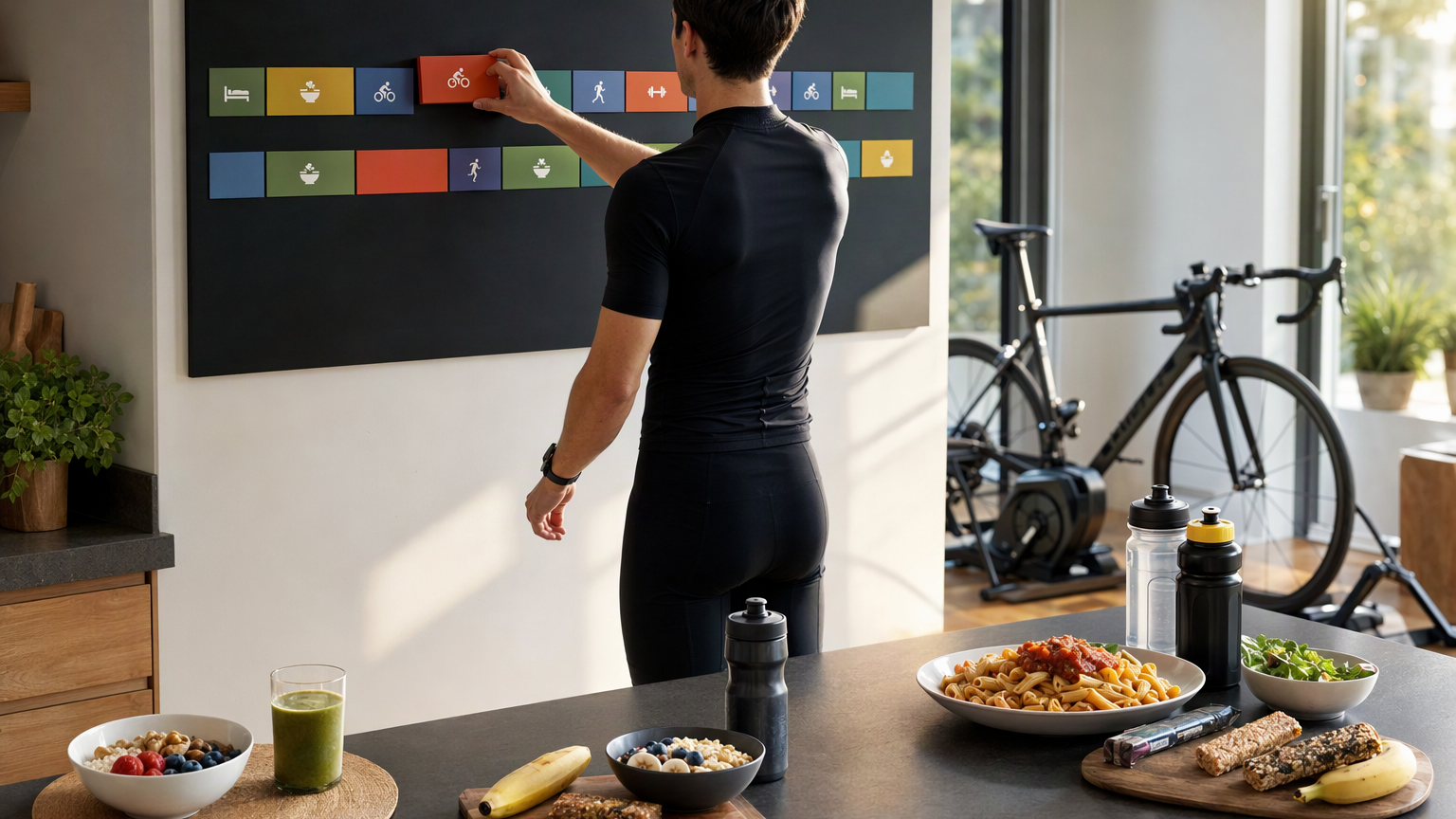
Many nutrition apps personalize calorie or nutrient targets. Athletes often need more: recommendations that account for body size, goals, preferences, tolerances, schedules, and changing training demands.
A personalized plan should be dynamic. If a workout moves, becomes harder, gets shortened, or disappears, the fueling recommendation should respond. Suggested meals may be useful, but they do not amount to personalized sports nutrition if the system ignores training context.
Personalized Nutrition Plans Versus Static Targets
A rest day, an interval workout, and a long ride should not automatically receive identical energy and carbohydrate guidance. Fixed targets can overlook the different demands of hard and easy sessions.
Detailed calorie totals may improve awareness, but precision alone does not create a useful performance plan. For athletes, timing and session-specific instructions can be more actionable than another daily estimate.
The Workout-Change Test
During an app trial, change tomorrow’s workout. Move its start time, shorten its duration, increase its intensity, or cancel it.
Then review the meals, pre-workout guidance, during-session fuel, and recovery recommendations. We use this test to distinguish adaptive fueling software from a conventional nutrition tracker.
Start With Your Training and Performance Goal
Define the app’s job before comparing features. It may need to support daily energy, long-session fueling, recovery, body-composition goals, race preparation, or a combination of these priorities.
The right app should match real training patterns. Runners, cyclists, triathletes, and hybrid athletes may share performance goals, but their fueling routines can differ substantially.
Match the App to Your Sport and Session Demands
Look for guidance that responds to:
- Workout duration, intensity, and start time
- Multiple sessions in one day
- Strength, endurance, and mixed training
- Indoor and outdoor conditions
- Sport-specific practical constraints
Cyclists may need portable options for long rides, while triathletes need plans that work across disciplines. Hybrid athletes may need support for both endurance and strength sessions.
Decide Whether You Need Tracking or Direction
Tracking records what happened. Direction explains what to eat and drink before, during, and after the next session.
If uncertainty is the main problem, another nutrient dashboard may not solve it. We recommend prioritizing forward-looking actions, such as those offered by a personalized nutrition and fueling app built around upcoming training.
Check the Pre-, During-, and Post-Workout Fueling Guidance
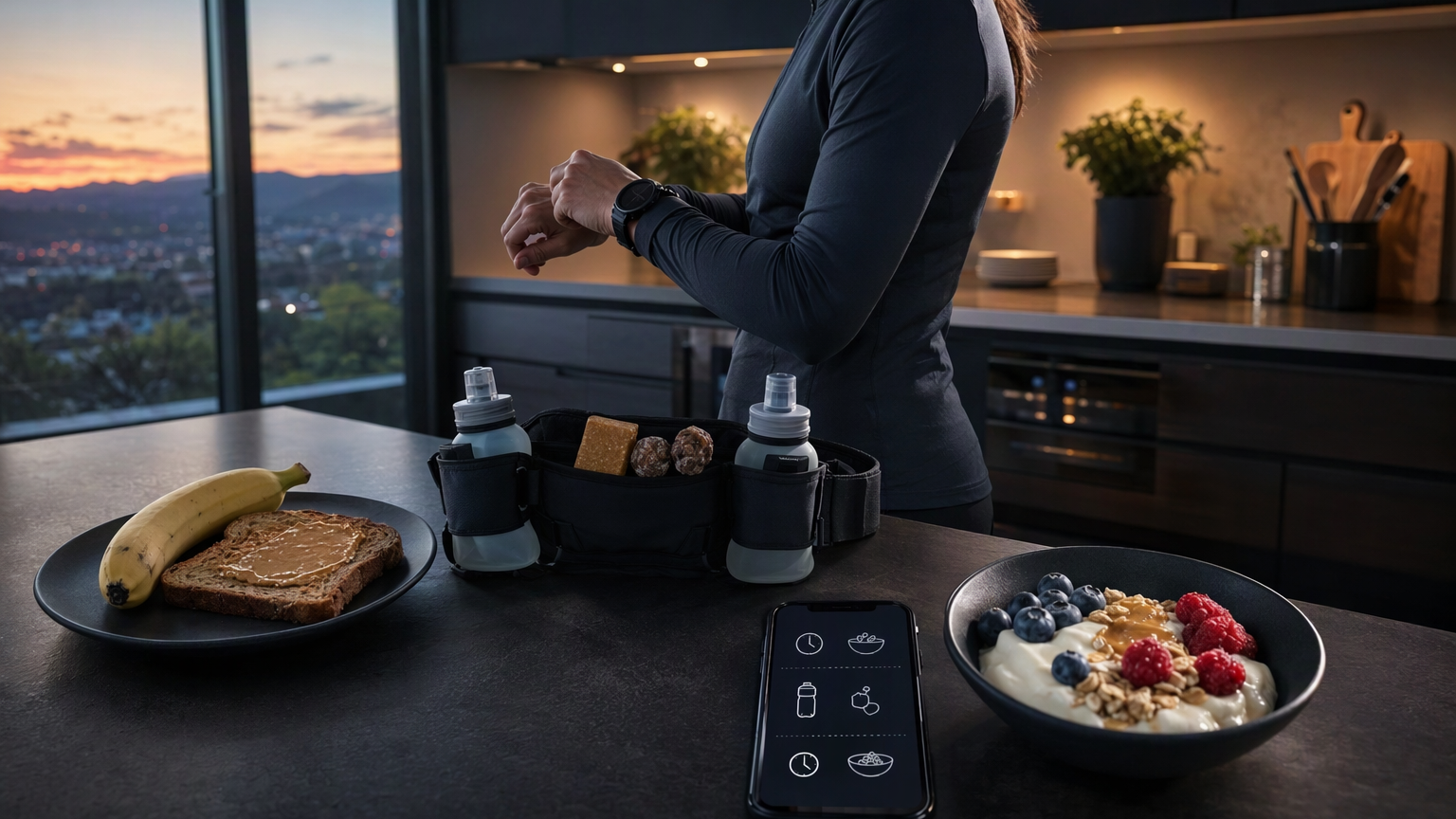
A useful workout nutrition app should translate a scheduled session into practical timing, portions, foods, or products. Carbohydrate and hydration guidance should respond to the planned workload rather than remain fixed throughout the week.
Before Training
Recommendations should consider the session’s start time, intensity, previous meal, and available digestion time. An early run calls for different options from an evening workout.
The app should also provide realistic alternatives when a full meal is impractical. Smaller or simpler choices can make the plan easier to follow.
During Training
For longer sessions, check whether guidance covers carbohydrate and fluid intake in a format that is easy to apply. The app should accommodate sports products, portable foods, and personal tolerance.
Ideally, athletes can record what they consumed and how it felt. That information can guide later decisions without forcing them to rebuild the plan manually.
After Training
Recovery guidance should reflect the completed work and the timing of the next session. A shortened easy workout does not create the same recovery needs as two demanding sessions close together.
Generic advice to consume protein and carbohydrates has limited value without practical timing, portions, or meal options.
Look for Race-Day, Hydration, and Gut-Training Tools
Race fueling works best when it is built and rehearsed during training. A race-day fueling plan app should account for carbohydrates, fluids, sodium, preferred products, expected duration, and event logistics.
It should also make room for gut training: practising planned intake and adjusting it based on comfort, conditions, and execution.
Build a Plan That Can Be Rehearsed
Look for specific quantities, timing, and portable options. Vague advice to consume carbohydrates regularly is difficult to execute.
Long training sessions provide opportunities to test products, bottle setups, and aid-station strategies. We recommend choosing an app that lets the race plan evolve from those rehearsals.
Treat Hydration as Individual, Not Universal
Hydration needs can vary with conditions, session duration, effort, sweat rate, and sodium losses. A single fluid target will not suit every athlete or workout.
A useful hydration planning app should accept individual inputs and allow adjustments when the expected weather, duration, or effort changes.
Test Whether Training Integrations Actually Change the Plan
Connecting a wearable, phone, or training calendar matters only if imported data affects the recommendations. Displaying a workout beside an unchanged calorie target is not meaningful adaptation.
Test incomplete sessions, last-minute edits, added workouts, and changes in weekly volume. Future training should influence the plan before the session begins. The workout-sync and nutrition-plan FAQ provides more context on this workflow.
Inputs That Should Influence Recommendations
Adaptive guidance should consider:
- Workout type, timing, duration, and intensity
- Scheduled and completed training
- Athlete goals and changing workload
- Food preferences and practical constraints
- Fueling experience and gut tolerance
Without relevant inputs, personalization may amount to little more than customized food suggestions.
Questions to Ask During a Trial
Compare the guidance for a rest day with the plan for a long workout. Are the meals and fueling instructions meaningfully different?
Next, edit the workout. We would expect recommendations to update promptly and remain practical enough to follow.
Balance Accuracy, Actionability, and Logging Effort
Food-data quality, serving clarity, regional coverage, barcode support, and editable entries all matter. Apps such as Cronometer emphasize detailed macro- and micronutrient tracking, while Lifesum supports several logging methods. Those features can improve record-keeping, but they do not automatically provide sports-fueling direction.
How Much Logging Is Sustainable?
Look for saved meals, repeat foods, quick entry, flexible portions, and easy corrections. The workflow should remain manageable during busy training weeks, travel, and race preparation.
More input is not always bad, but unnecessary administration can undermine consistency. In our view, an app should create more clarity than paperwork.
When Calorie Accuracy Is Not the Deciding Factor
A detailed daily total can still leave an athlete unsure what to eat before intervals or carry on a long ride. That is accurate record-keeping without actionable planning.
Judge the app by how well it supports preparation, execution, recovery, and race practice—not only by how many nutrients it displays.
Compare Free and Paid Apps on Outcomes, Not Feature Count
Free nutrition tools may provide food logging, calorie totals, and basic nutrient tracking. That can be enough for general awareness or for athletes who already have a reliable fueling strategy.
Payment may be worthwhile when it adds training adaptation, session-level guidance, race planning, hydration support, or ongoing refinement.
Free May Be Enough When
Consider a free option when:
- The goal is basic food or nutrient awareness
- A separate fueling strategy already exists
- The main need is a dietary record
- Training demands are relatively consistent
Test usability and data quality rather than assuming price determines value.
A Paid Plan May Offer More Value When
A paid plan may help when training changes frequently or a target event requires a rehearsed strategy. Before subscribing, test the core adaptive workflow. Extra features add little if the workout-change test fails.
Verify Platform Access, Privacy, and Professional Safeguards
Confirm platform availability, device compatibility, regional access, export options, and any offline limitations. Review how the app collects, retains, shares, and deletes food, body, health, and training data.
We also recommend checking whether qualified nutrition professionals inform the methodology. An app should not replace clinical care for medical conditions, disordered eating, pregnancy, significant allergies, or other complex needs.
Privacy Questions to Check Before Connecting Accounts
Ask:
- What information is collected and retained?
- Is data shared with third parties?
- Is it used to train automated systems?
- Can records be exported or deleted?
- Can permissions be limited?
Read the privacy policy before connecting wearables, health platforms, or training accounts.
Coach and Multi-Athlete Considerations
Coaches need useful visibility without unnecessary access to sensitive information. Permissions should be clear and controlled by the athlete.
Athletes training for the same event can still have different schedules, preferences, sweat rates, and tolerances. Individual plans matter, and access to expert nutrition coaches can provide human support when software alone is not enough.
Use This Checklist to Choose the Right Personalized Nutrition App
Score each option on:
- Training adaptation
- Pre-, during-, and post-workout guidance
- Race-fueling and gut-training support
- Individual hydration planning
- Useful integrations
- Logging burden
- Data quality and privacy
- Platform compatibility
- Price relative to value
For us, “best” means the app reliably converts upcoming training into an achievable plan.
Run a Seven-Day Personalization Test
Include varied sessions, a rest day, and at least one schedule change. Check whether the recommendations adjust logically and remain easy to execute.
Record whether the app reduces uncertainty or simply creates more logging. The difference should become clear during normal use.
Make the Final Decision
Choose the tool that supports the next session, fits the athlete’s routine, and helps build a race strategy through practice. Reject feature-rich options that fail the workout-change test.
FAQ
What Is the Best Nutritionist App?
The best option depends on whether the athlete needs software or professional support. Training-synced software can guide routine fueling, while a credentialed professional is better suited to medical concerns, disordered eating, allergies, pregnancy, or complex performance needs.
What Is a Personalized Nutrition Plan?
It is a plan adapted to an individual’s goals, preferences, tolerances, schedule, and training demands. For athletes, guidance should change across rest days, hard workouts, long sessions, and races.
What Is the Best App to Track My Nutrition?
Look for reliable food data, clear serving sizes, efficient logging, editable entries, and useful exports. For performance goals, we also recommend session-specific fueling guidance rather than tracking alone.
What Is Better Than MyFitnessPal for an Athlete?
MyFitnessPal supports calorie, food, and activity tracking. Athletes who need forward-looking guidance may prefer an app that adapts carbohydrate, hydration, recovery, and race-day recommendations to scheduled training.
Turn Tomorrow’s Training Into a Fueling Plan
Test whether tomorrow’s workout becomes a clear fueling plan—and whether that plan changes when training changes.
Explore Fuelin’s training-synced approach and build practical guidance around your next session.