
TL;DR
Effective fueling supplies the carbohydrate, fluid, and electrolytes needed for a specific training session or race. We recommend building a plan around duration, intensity, conditions, gut tolerance, and logistics—not a generic gel schedule. Test the plan in training, record the results, and adjust one variable at a time.
Table of Contents
- What Fueling Means in Endurance Sports
- Build Your Personalized Endurance Fueling Plan
- How Many Carbohydrates Do Endurance Athletes Need?
- Fueling by Sport: Running, Cycling, Triathlon, and Hyrox
- Fueling for Long Runs Without Stomach Problems
- Fueling for a Marathon: Before, During, and After
- Hydration for Endurance Athletes: Fluid, Sodium, and Sweat Rate
- Test, Personalize, and Execute Your Race-Day Plan
- Fueling Questions Athletes Ask
- FAQ
- Build a Plan That Changes With Your Training
What Fueling Means in Endurance Sports

When energy disappears late in a race, fitness is not always the problem. Fueling, pacing, heat, or hydration may be contributing.
In endurance sports, fueling means supplying energy, fluid, and electrolytes around training and competition. A sound approach supports workout quality, sustained effort, recovery, and dependable race execution.
“Fueling” is standard in US English, while “fuelling” is standard in UK English. “Feuling” is generally a misspelling. Here, we use fueling to mean endurance nutrition rather than automotive or industrial fuel supply.
Daily nutrition versus workout fueling
Daily nutrition includes regular meals, snacks, hydration, and recovery across the week. Workout fueling covers what an athlete consumes before, during, and after a particular session.
A gel cannot correct consistently inadequate daily intake. Equally, a balanced dinner does not replace a practical carbohydrate and hydration plan for a long session the next morning.
Why bonking is not always a fitness problem
Late-session fading can reflect low carbohydrate availability, poor pacing, heat stress, inadequate fluid intake, or several factors together. More training is not always the answer.
We treat fueling as a performance skill. Athletes need to practise carrying products, opening them while moving, consuming them at intensity, and adapting when conditions change.
Build Your Personalized Endurance Fueling Plan
Start with the session. Define the sport, duration, intensity, purpose, likely weather, and access to bottles, food, or aid stations.
Then consider:
- Current carbohydrate and fluid intake
- Training history and body size
- Gastrointestinal tolerance
- Food and flavor preferences
- Carrying capacity and course logistics
- Previous performance and recovery
Set initial carbohydrate, fluid, and sodium targets, then test them in representative workouts. We recommend recording energy, pace or power, stomach comfort, thirst, intake, hunger, and recovery.
A training-synced plan should change with demand. An easy recovery run and a long, demanding ride should not use the same prescription.
The five inputs that change your plan
- Duration: Longer sessions usually require more planning and more opportunities to consume fuel.
- Intensity: Harder work may increase carbohydrate demand while making digestion more difficult.
- Environment: Heat and humidity affect fluid needs and product tolerance.
- Personal tolerance: A target is not useful if it repeatedly causes stomach problems.
- Access to fuel: Bottles, pockets, transitions, and aid stations determine what is practical.
A simple test-and-adjust loop
Use a repeatable process:
- Plan the session and intended intake.
- Follow the plan as consistently as possible.
- Record performance, comfort, intake, and recovery.
- Change one variable before the next comparable session.
Changing everything at once makes it difficult to identify what worked.
How Many Carbohydrates Do Endurance Athletes Need?
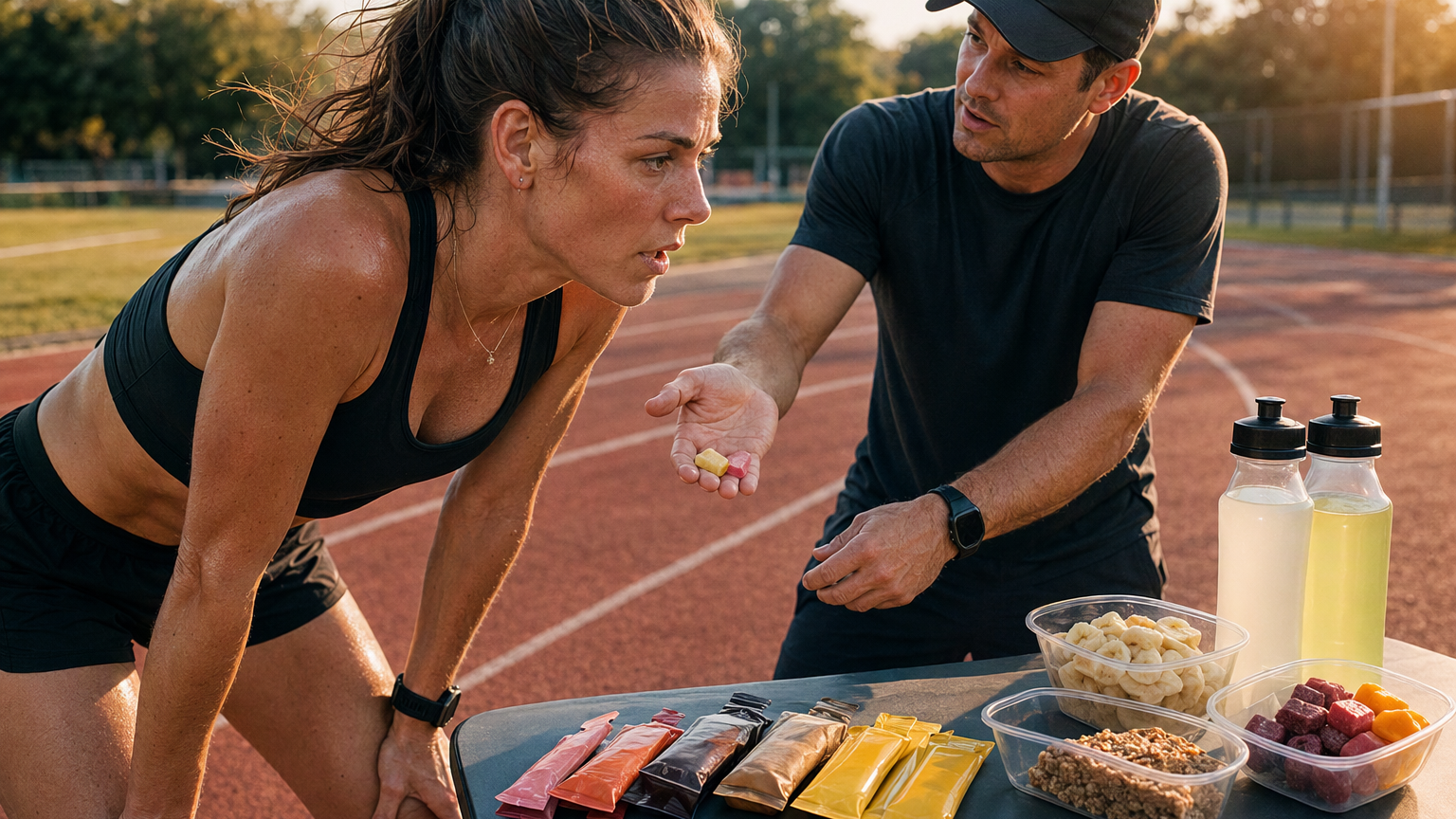
Carbohydrate intake should reflect session duration and intensity. Generic advice such as “take a gel at regular intervals” ignores the product’s carbohydrate content, the athlete’s output, and the length of the session.
We prefer to track grams per hour because it allows gels, drinks, chews, bars, and tolerated foods to be compared on the same basis. More is not automatically better. Intake must remain practical and tolerable, especially during hard running.
Athletes with diabetes, metabolic conditions, or other clinical concerns should work with an appropriately qualified healthcare professional.
Carbohydrate starting points by session
- Short, easy session: During-workout carbohydrate may be unnecessary if the athlete starts adequately fueled.
- Moderate session: Introduce a modest intake and assess energy and comfort.
- Long or demanding session: Gradually test greater carbohydrate delivery using suitable products and timing.
- Race simulation: Rehearse the intended approach at race-relevant intensity and in realistic conditions.
Single-source versus multiple-transportable carbohydrates
Some products combine glucose and fructose, which use different intestinal transport pathways. These blends may suit athletes testing higher carbohydrate intakes, but they should still be introduced gradually.
A formula that looks ideal on paper can fail if its sweetness, concentration, or serving size causes nausea or bloating.
Turn grams per hour into food and drink
Add the carbohydrate listed on each product label and divide the total by the planned exercise time. Count every source, including drink mix.
Combining drinks, gels, chews, or tolerated foods may reduce flavor fatigue and simplify execution. The best combination is the one an athlete can carry, consume, and tolerate consistently.
Fueling by Sport: Running, Cycling, Triathlon, and Hyrox
Carbohydrate needs can be substantial across endurance sports, but carrying, chewing, and digesting fuel differ by discipline.
Runners
Long-run fueling generally requires compact products that are easy to open while moving. We recommend practising at the intended pace rather than testing every product during easy jogging.
Coordinate concentrated carbohydrate products with water access. Several gels taken without enough water may be difficult to tolerate.
Cyclists and triathletes
Cyclists can carry bottles and solid foods more easily, creating more options for regular intake. Bottle concentration and total carbohydrate should be planned together because changes in drinking can also change carbohydrate delivery.
Triathletes must account for transitions and body position. Bike intake should support the run without leaving the stomach uncomfortably full.
Hyrox athletes
Hyrox combines running with high-output functional stations, so large or poorly timed servings may feel uncomfortable. When opportunities to eat during the event are limited, pre-event fueling becomes more significant.
We favor simple, rehearsed options matched to expected duration, intensity, and individual tolerance.
Fueling for Long Runs Without Stomach Problems
Potential causes of gastrointestinal distress include:
- Large servings consumed at once
- Overly concentrated drinks
- Too little water with gels
- Heat or dehydration
- Unfamiliar products
- Excessive caffeine
- High intensity
- Difficult-to-digest foods
Real food is not automatically better during hard exercise. Portability, carbohydrate delivery, chewing, and tolerance often matter more.
How to train your gut
Begin with an intake that is already comfortable, then increase it gradually across comparable sessions. Practise in likely weather and at race-relevant intensity.
Once a protocol works, repeat it before increasing intake or changing products. Persistent vomiting, blood in the stool, severe abdominal pain, fainting, or symptoms outside training require medical guidance.
Troubleshoot nausea, bloating, cramps, and urgency
Review the full plan:
- Total carbohydrate intake
- Serving size and timing
- Drink concentration and water access
- Pace or power
- Heat and humidity
- Caffeine
- Fat, fiber, and protein
Change one factor at a time so the next test produces useful information.
Fueling for a Marathon: Before, During, and After
A marathon fueling strategy should be developed in training. Build it around expected finish time, pace, course profile, forecast, aid stations, and carrying options.
Before the start
Choose a familiar carbohydrate-rich meal with portions and timing already tested. Account for digestion, bathroom access, travel, bag drop, and corral timing.
During the marathon
Estimate the carbohydrate needed from the expected race duration and the hourly intake that worked in training. Divide it into manageable servings and map them to aid stations or landmarks.
Carry a backup where practical. Begin the rehearsed plan before obvious fatigue appears, and avoid an aggressive early pace that disrupts energy management or digestion.
After the finish
Prioritize carbohydrate, protein, fluid, and sodium, followed by a normal meal as appetite returns. The immediate choice may be a drink, snack, or meal depending on stomach comfort.
Hydration for Endurance Athletes: Fluid, Sodium, and Sweat Rate
Hydration should limit significant dehydration without encouraging overdrinking. Fluid needs vary with duration, temperature, humidity, pace, clothing, acclimation, and individual sweat losses.
Sweat rate and sweat sodium concentration are separate factors. Heavy fluid loss does not automatically indicate an unusually high sodium concentration.
Estimate sweat rate without false precision
A practical estimate can use pre- and post-session body weight, fluid consumed, urine produced, and session duration. Repeat the assessment in different conditions and treat the result as a guide, not a requirement to replace every drop during exercise.
Set a practical sodium approach
Consider conditions, visible salt residue, previous experience, product labels, and any professionally conducted testing. No single sodium target suits every athlete.
Sodium also does not explain or prevent every cramp. Pacing, fatigue, heat, muscle demand, and training status may contribute.
Coordinate hydration and carbohydrate delivery
Count carbohydrate from sports drinks within the total fueling plan. Consider drink concentration, gels, plain water, and weather together so fluid intake does not accidentally control carbohydrate intake.
Test, Personalize, and Execute Your Race-Day Plan
Write down:
- Carbohydrate intake
- Fluid opportunities
- Sodium sources
- Product quantities
- Carrying method
- Course checkpoints
- Backup options
Race rehearsals should reflect expected intensity, equipment, weather, and aid-station access as closely as practical. A personalized nutrition and fueling app can keep daily nutrition and workout fueling aligned with a changing schedule. Our guide to choosing a personalized nutrition app explains which features support training decisions.
Your pre-race rehearsal checklist
Confirm products, quantities, packaging, bottles, aid stations, breakfast timing, caffeine use, and early-race intake. Prepare alternatives for heat, missed stations, stomach discomfort, dropped fuel, or a slower finish.
Signs your plan needs adjustment
Repeated fading, persistent hunger, poor recovery, stomach distress, excessive thirst, bloating, or frequent urination may signal a mismatch. Look for patterns, change one variable, and retest.
Fueling Questions Athletes Ask
These short definitions clarify common terms.
Is it fueling or fuelling?
Both are correct. “Fueling” is standard in US English; “fuelling” is standard in UK English.
What does fueling mean for an athlete?
It means planning energy, carbohydrate, fluid, and electrolytes around training and competition.
Is it fueling or filling?
Fueling supplies energy. Filling makes something full. A full stomach does not necessarily provide suitable nutrition for the session.
What does fueling up mean?
Fueling up means consuming energy before or during activity, with the amount and format matched to the session.
FAQ
Do all endurance sessions require fuel?
No. Short, easy sessions may not require carbohydrate during exercise if the athlete starts adequately fueled. Longer or harder sessions usually need more planning.
Should athletes use gels or real food?
Either can work. We recommend choosing products based on carbohydrate content, portability, ease of use, and tolerance.
Can sports drink replace gels?
It can provide some or all of an athlete’s carbohydrate, fluid, and sodium, depending on the product and plan. Count it within the total intake.
How often should a fueling plan be reviewed?
Review it whenever training volume, intensity, climate, event type, tolerance, or product availability changes.
Build a Plan That Changes With Your Training
Stop using one gel schedule for every workout. Use Fuelin’s personalized nutrition and fueling app to build a training-synced plan, test it in real sessions, and reach race day with a strategy already proven in training.